Author: admin

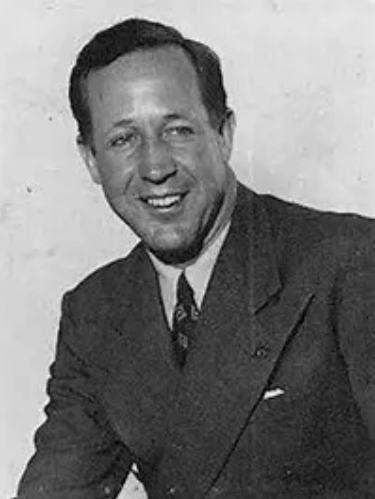
  • T. Townsend Brown

    Who is Thomas Townsend Brown? The most authoritative biography of T. Townsend Brown is found at ttbrown.com. As that website author compiled his work, he posted his work online. That intensive work is now available as a compelling book.

    T. Townsend Brown is most noted for his work of electrogravitics and the Biefeld-Brown Effect. The Biefeld-Brown Effect, aligns a positive charge of a capacitor on the leading edge of a transportation apparatus and a negative charge on the trailing edge. This is different than a magnet. This is beyond the capability of magnetism; magnets aren’t attracted to all objects but electrogravitics applies to all matter.

    T. Townsend Brown discovered electrogravitics in 1918.  In 1923, Professor Biefeld of Denison University suggested to his protege, Townsend Brown, to preform experiments which led to the discovery of the Biefeld-Brown Effect, and, ultimately, to the electrogravitational energy spectrum. 

    The Biefeld-Brown Effect was established by Dr, Paul Biefeld and T. Townsend Brown. It finds that a highly charged capacitor, when properly suspended, shows a tendency to move; relative to gravitational force. Their experiments proved that when the poles of a freely suspended charged capacitor (even in a vacuum) were placed on a horizontal axis, a forward thrust would be produced which would move the capacitor in the direction of the positive pole. Additionally, the direction of thrust would reverse in conjunction with a polarity change. 

    This gravitational experiment was demonstrated by placing the capacitor on a beam balance and charging it. When the positive pole pointed upwards, the condenser would move to a point of equilibrium, when the positive pole was pointed downwards, the balance would show a downward deflection

    This Biefeld-Brown Effect is associated with the term electrogravitics. The term electromagnetics is a commonly accepted term in limited circles. Electrogravitics raises questions about the accuracy of theoretical physics in its pursuit of electrons being a magnetic force; or can it be that subatomic motion is influenced by gravitational forces? 

    Finding studies in the science of electrogravitics is as obscure as Nikola Tesla’s writings about gravity. The beginning of electrogravitics started with the Biefeld-Brown Effect in 1918. As Tesla’s work focused on the utilization of waves in matter, and his contemporaries developed theories for particle mass, the science of electrogravitics disappeared from science by the 1960s.

    In searching the topic of gravitational propulsion, one of Nikola Tesla’s distant contemporaries: T. Townsend Brown discovered electrogravitics in 1918.  In 1923, Professor Biefeld of Denison University suggested to his protege, Townsend Brown, to preform experiments which led to the discovery of the Biefeld-Brown Effect, and, ultimately, to the electrogravitational energy spectrum. 

    In the 1950s, Professor T. Townsend Brown worked with US Naval research on an anomalous propulsion force from a high voltage capacitive charge, similar to an electrokinetic force (for anyone who may be reading this that doesn’t know what that is: kinetic energy is the force of its motion). By the late 1950s, after 30 years, he was persuaded, or frustrated by the absence of support, that the gravitational effects of electrons had no commercial value and thereafter referred to the science of electrogravitics as “stress in dielectrics”. 

    Links for additional information:

    http://ttbrown.com/defying_gravity/21_gravity.html

    https://electrogravityphysics.com/townsend-brown-capacitors

    https://electrogravityphysics.com/wp-content/uploads/Musha-Biefeld-Brown.pdf 

    https://file.scirp.org/Html/9-7501400_36094.htm

    https://www.sciencedirect.com/science/article/abs/pii/S0304388611001367

  • Space Travel

    Space travel has long been a child’s dream. There are many aspects of space flight that are as fascinating as the imagination can wander. 

    But, there’s a serious problem. With the speeds achieved by the brightest of today’s rocket science, space travel takes too long to get anywhere. The fuel of modern rockets to reach warp speed is unobtainium. The entire rocket science industry with conventional engineering designs were designed as debris. Built on a foundation of inefficiency and waste. 

    The most intelligent scientific minds carry out the same experiments of a child that places a tin can on top of a firecracker. Hundreds of millions of dollars are spent to place astronauts in a capsule on top of a bomb. Explosions serve to launch rockets fast enough to reach escape velocity. When the capsule portions reach the outer atmosphere and out of the major grip of Earth’s gravitational influence, the astronauts’ capsule maintains their launch speed near 25,000 mph.

    The purpose for using fuel to propel a vehicle is to capture the reaction of energy surge released in chemical explosions. What’s the problem that is ignored by an engineering industry focused on principles of aeronautical design? There is an issue found in physics that shows the release of energy in a chemical explosion travels in 360 degrees. And a rocket only travels in one direction. This means that a rocket is able to capture, how many degrees of energy release? 

    Any space flight for significant travel in space must have significant speed. This eliminates the use of fuels for chemical reactions whose design produces insanely inefficient waste. 

    What’s the solution? The solution begins by removing the field of space flight from the influence of aeronautical.engineering principles.  

    In November 2021, the NASA solar probe, Parker, had become the fastest object built by humans. It passed the Sun at a speed of 364,621mph. This was accomplished by its “gravity assist” speed boost in making a close passage to Venus.

    Using the best rocket science engineering available, mankind has achieved 25,000mph. Light speed (C) is 186,828 miles per second. 25,000mph is one-twenty-five-thousandth of C (actually, 0.000037279123279345). For human engineering to reach only 1% of C, it requires a mechanism to attain the speed 186.282 miles/second, or 670,617 miles/hour. Parker, NASA’s solar probe, reached half the speed of 1% of C. How?  By utilizing the attractive nature of gravity. 

    The common-sense conclusion is that the attractive nature of gravity is much more advantageous than the current engineering pursuit of propulsion in space travel.

    Where can mankind go in space at 25,000 mph, how many miles is that in a day? 600,000 miles. Only 9.5 hours to the moon in a straight line. Mars is 61,470,000 miles, 5 minutes at light speed, 2,459 hours or 98 days in a straight line at 25,000 mph but, orbital considerations cause the trip to Mars to be around 8 months.  

    Theoretically, the closest distance in the orbits of Earth and Mars is 33.9 million miles, according to Space.com . At the furthest distance, the two planets are around 250 million miles apart. 

    How can the engineering intellect of mankind reach significant speed for space travel? 

    • Step 1: stop using explosions to blast a can into space 
    • Step 2: stop seeking propulsion
    • Step 3: study gravity 
    • Step 4: find people who have built devices and crafts that have the capacity to fly without being based on aeronautic principles 

    CATTCC is a think tank for these topics. CATTCC members are involved in the conversations and support this work. 

    -member link- 

    Reaching significant speeds in space flight is a process that will eventually take place. Beginning the process starts with looking. The principles NASA affiliates used in reaching its highest speeds is certainly proof that gravity provides faster speed than propulsion via chemical explosions as a fuel. 

    The common perception for using gravity with transportation is the term “anti-gravity”. The proper term is ‘the manipulation of gravity’. By utilizing gravitation motion, rather than eliminating the concept of its existence, gravity can be used as a source for motion.  

    A new mode of transportation is essential. It will also be the outcome for research of gravity as a source of motion for transportation. The future of transportation floats. It’s the outcome to the application in the evolution of technology.  

    What is CATTCC doing? Its study posed the question: what is gravity?  How does it work? The answers were posted.

    What do we look for in considering gravity as the source of motion for transportation?  Specifically, it is the attractive force that gravity has which is our focus.  All current forms of transportation use propulsion as the source of motion.  By considering the attractive force of gravity as the source to attract an object; it becomes clear that this is a source for transportation motion.  

    What is the attractive force of gravity?  Its force was measured in an equation by Issac Newton 400 years ago.  It’s measured by knowing the result of a motion.  If you are standing on Earth’s surface holding a set of keys in your hand and release the set of keys, it doesn’t require a college degree in physics to know what will happen: the set of keys will be immediately attracted to the ground. What is the source of attraction? Newton defined it as mass, the mass in the set of keys is attracted by a larger body of mass.   

    The definition of gravity was not explained by Newton 400 years ago. He defined its principles of application.  

    There is a new theory for gravity. It provides the rationale to show a movement flow in calculating gravitational waves for using gravity as a source for motion. And, with gravity as the most abundant force in the universe, space flight becomes a viable consideration. . 

    How is space flight made possible? By the application of certain principles as shown by Nikola Tesla in the ship Otis Carr built in the late 1950s.  

    How can gravity serve as the source of motion for transportation? According to the Biefeld-Brown Effect, align a positive charge of a capacitor on the leading edge of a transportation apparatus and a negative charge on the trailing edge. Okay, that’s a magnet. This is beyond the capability of magnetism; magnets aren’t attracted to all objects but electrogravitics applies to all matter. As a source of motion for transportation, how does this provide floatation or levitation? And how does this provide acceleration? The one thing I know: it has to involve spin.

  • Future of Transportation

    The future of transportation floats. Its source of motion is gravity.

    The course of today’s transportation is unsustainable. Where’s the solution? The electric motors in cars don’t prevent traffic jams. The computer driven cars don’t minimize traffic.

    Where are the answers to find sustainable transportation? The automobile became Western Society’s main source for transportation 125 years ago. Trains were a technology built to meet the transportation needs of society 200 years ago. Airplane technology is 100 years old and still can’t fly into space.

    Floatation, since the 1940s, remains an unsought science for transportation. Floatation was used as a lighter-than-air technology with blimps and dirigible balloons.

    Magnetic levitation (maglev) technology provides an efficient use of energy by removing friction.

    In the early 2000s, China purchased the rights to use the German, Transrapid International maglev technology. In 2004, they became the first country to have built a public maglev system with their 19-mile Shanghai maglev train from Pudong to the Shanghai airport.  

    China has since built its own technology and is now building its sixth maglev line of several variations of maglev.

    Japan is building their own maglev technology train. The Chuo Shinkansen is being built between Tokyo and Nagoya, a 178-mile distance. This maglev system uses superconductor technology.

    Although maglev technology is new, trains are a very old transportation system. All train technology is tied to its urban land-use. In transit oriented designed communities, train technology provides large groups of people the ability to go from station to station.

    The foundation to all urban growth is its primary source of transportation. The automobile centric land-use design does not support mass rail transit as a functional transportation alternative in its land-use design. The automobile is wholly unsustainable. This demands a new mode of sustainable transportation. 

    What’s to be used for a new mode of transportation? What is transportation’s future? Is it more cars with electric motors? Cars that use hydrogen combustion motors? Computer systems that operate cars? An electric version of helicopters and planes? Reintroducing dual mode train-tracks to carry cars? 

    There are six modes of transportation: walking, animals, boats, trains, automobiles, and airplanes. A new mode of transportation uses something totally different. What’s different? Something that uses floatation. That is the future of transportation. A new mode of transportation. 

    Where does the research start? By recognizing the past and choosing research with a different perspective. This perspective begins by answering a question: what floats? Magnetism allows floatation. 

    The other question is, can gravity be used? This requires answering the question: what is gravity? By understanding how gravity works, can it be manipulate to use an opposing force for flotation? 

    It’s possible the answers to these questions can provide the future for transportation. 

  • Current Transportation

    The starting point is where we are, an expanse of unsustainability. 

    How does the future change by traveling in the same direction?  Any change to transportation requires technology research in a different direction. 


    It’s been stated many times throughout this website, the mode of train technology is 200 years old, the mode of automobile technology is 125 years old, and the mode of airplane technology is 100 years old. 


    A new mode of transportation technology requires research with a fresh perspective for something different, something new. With the primary source of Western Society transportation based upon the automobile, replacing the automobile requires a source of transportation that is more convenient, faster, less expensive, safer, and more efficient.  This list of requirements is listed in order of importance. 


    For anyone in an automobile centric land-use design area, there is a serious question: is train travel more convenient than a car? How close is a train station and what is its arrival and departure schedule? To anyone that would in the slightest bit suggest that trains could ever replace the automobile as a practical application for transportation has no merit in the conversation. 


    What’s faster than an automobile? One hundred miles per hour, even with existing speed limits. The first automobile to exceed 100 mph was in 1905. 


    Current train type technology for long distance travel is in an air evacuated tube. There are several companies pursuing this hyperloop technology. One company surpasses all hyperloop trains with a smaller vehicle size, yet increases passenger per hour carrying capacity: ET3. Its computer simulated speed is Mach 6. Its cost per mile to build is ¼ the cost to build a four lane freeway per mile. 


    What transportation technology is more convenient, faster, less expensive, safer, and more efficient than a car? Hollywood has created a few but, other than The Jetsons, reality hasn’t provided a replica yet. 


    The one thing commonality for current technology transportation methods, actually two things: unsustainable and propulsion driven. 


    All propulsion causes thermodynamic loss. Engineers consider limitation as a starting point. The needed perspective for advances in transportation: search to eliminate thermodynamic loss. This is a task for theoretical physics more than the field of aeronautics engineering. Perspective to this type of discovery is considered an impossibility for engineers who follow predetermined limits of regulatory allowances and conditional laws based on the teachings of procedure.


    Science Fiction writers were first to create rockets. Cartoon artists were the first to draw designs of rockets landing on the moon. Imagination is unlimited in perception of how to build a new mode of transportation using gravity as its source for motion. 

  • Innovation

    The first name for innovation is Nikola Tesla

    Transportation is due for innovative action to produce a sustainable mode of travel.

    What was the major form of transportation prior to train technology? Walking and animals. Where did train technology come from? What was the impetus that brought trains into existence? They were powered by steam, a process of technological advance from a burgeoning society. The need in today’s society is fueled by sustainability.  

    The train was invented in the early 1800’s. The first train built in the US was a steam locomotive in the 1830’s. By 1850, there were more than 9,000 miles of track in operation. Fifty years later, Western Society had increased the expansion of urban growth with its transit-oriented land-use design to capture 193,346 miles of railroad track. Twenty years later, by 1920, train technology reached its zenith with more than 1,000 companies operating 253,000 miles of railroad tracks in the US.

    Today, 700 railroad companies in the United States operate on less than 140,000 miles of privately owned track in every state except Hawaii, according to the Association of American Railroads, as of Feb 3, 2022

    Most of today’s technological innovations are in the fields of information and communications. Train technology reached its zenith 100 years ago. Automobile technology is 125 years old. Airplane technology is 100 years old. With the increase of global population and technological advances, transportation needs to meet social demands. The social demand is screaming for answers of sustainable and efficient transportation.

    The corporate responsibility in the private sector of the car industry is to increase car sales and seek profits. Road maintenance and building was allocated to government in the 1930s. As the private sector seeks its profit and government sets safety, emission standards and road maintenance, who is looking towards the future? Society’s demand and needs for new modes of transportation are being ignored.

    Innovation requires direction in its motivation. Current methodologies of transportation are propulsion driven. Innovations in transportation have to be found beyond its current limitation. 

    Transportation innovation begins when the barrier of propulsion is broken through. Discovered towards light speed travel are the goal.

    Innovation in transportation brings the future of transportation.  The future of transportation floats, its source of motion is by manipulating gravity.

  • Maglev

    Politics explains the absence of magnetic levitation (maglev) technology in the US. Public transportation is an exorbitant expense for large-scale urban public transportation systems. It’s beneficial to maintain a failed system than to implement something different.

    Public maglev train systems have been completed and operating in only one country.  Communism doesn’t have the freedom of an adversary political party. China is now building its sixth or seventh maglev train system. 

    The leader in efficient mass transit technology is maglev. This technology isn’t available for the automobile industry.

    In tune with Malcolm Gladwell’s book, ‘The Tipping Point’, today’s growing youth are adapting to and seeking alternatives from the automobile. The youth are well accustomed to technology. Many large and financially powerful tech companies are luring the population into adapting its movement towards autonomous automobiles. The reception is cold. 

                    Train technology is dysfunctional to Western Society’s automobile centric land-use design. The immediate transportation solution? Implementation of the Personal Rapid Transit (PRT) version of maglev transportation technology.

    The following is an excerpt from a 2010 presentation which outlines Maglev technology. Several of the companies mentioned which were in the process of development are no longer in business and there are a few companies in existence now that weren’t created then. 

    “New Technology Transit systems fit into to the model for environmentally sustainable urban growth by using clean advanced transit technology, which also provides the convenience of on-demand and direct to destination capability.

                    What is environmentally sustainable about these advanced transit technologies? Many system designs include solar electric generation for power, computer operated: for increased vehicle frequencies, stress relief of navigation, low noise levels, public accessibility, public Rights-Of-Ways (ROW), and as a convenience they maximize overall economic productivity by reducing wait times. To afford increases of heavier ridership New Technology Transit is automatically able to comply with an increase in frequency of vehicle’s headway (distance between vehicles) via the computerized technology which shuttles more vehicles to particular locations.  

                    In urban planning, demand for transportation is proportionate to the increase in population. As populations grow, transportation loads expand at a proportionally greater rate; and there is an increased appetite for land consumption and improved mobility. By investing in an on-demand transit system, traffic congestion is mitigated through the use and application of this advanced technology. By the implementation of New Technology Transit in regional urban planning, the increased traffic loads are mitigated.

                    As the automobile is wholly unsustainable, oil base surface streets cause ground water hazards.  The massive proliferation of roads and automobiles are no longer a viable resource for mobility. 

                    Maglev technology in transit systems provide mobility solutions for true environmental sustainability. Part of the efficiency in non-train maglev transit systems are the two fundamentals: weight and resistance. 

                    In comparing maglev; automobile technology requires a 3,000-pound vehicle to carry a single 200-pound load. The efficiency of non-train maglev technology is its ability to design lightweight vehicle systems. Granted, a passenger carrier weighs a comparable weight of an automobile without a heavy steel frame and a motor. Without contact to the ground, however, it remains virtually weightless and maintains efficiency. With maglev, a 500-pound load can be propelled by a ¼ horse electric motor (Lev-X).  Resistance caused by the friction of moving parts in an automobile causes massive inefficiencies. There are no moving parts on a passive maglev transit system: the load carrying vehicles are levitated by the magnetic force of the passive guideway; and therefore, not attached as moving parts.

                    Resources – A 2010 list of Maglev projects completed or in development:

    HSST (Japan)

    Rotem (Korea)

    Maglevision (Philippines)

    Transrapid (Germany; Shanghai, China)

    Autoshuttle (German)

    Central Japan Railway Co. (JR Tokai) (Japan)

    Yamanashi Maglev Test facility (Japan)

    Maglev 2000; aka: American Maglev Star – AMS (Florida)

    American Maglev (Georgia)

    Magnemotion (M3)(Massachuetts)

    Magplane Tecnology (Massachusetts)

    Fastransit (NY)

    Applied Levitation (CA)

    Urban Maglev (General Atomics) (San Diego)

    Modern Transport Systems (MTSC) (CA)

    Magnetrans (CA)

    Unimodal, (Skytran) (CA)

    Lev-X (WA)

    ETT, (Florida)

    Zhonghua 6 (China)

    Beijing Enterprises Holding Maglev Technology Development Co. Ltd (China)

    Maglev transit technology is sustainable transportation. Sustainable transportation requires maglev technology to proliferate. The most efficient form of transportation is found with passive magnetic guideways. Passive magnetic guideways are a different technological approach than the methodology used to electrify the guideways with electromagnetism. Electrified guideway technology seen in the commercialized Transrapid system in Shanghai and other train systems being developed are much more complicated and more costly. The cost of building non-electrified guideway infrastructure for smaller lightweight vehicles is substantially less expensive; non-train direct to destination technology is more efficient as an urban transportation system.  

                    Maglev systems can be designed to encompass global travel. With no resistance and encapsulated in an air evacuated tube, further reduction of air resistance; one maglev system in development (ET3) has computer simulated its travel speed at Mach 6 with an efficiency rate incomparable to any other form of transportation system. 

                    The explanation for high efficiency in New Technology Transit systems is found in the agility of vehicle size; smaller vehicles which weigh less, requiring less intensive infrastructure. Another ingredient of non-train New Technology Transit technology is interactive computerization of automatic track, or guideway, switching; which lowers system maintenance and increases overall system efficiency with bypassing unwarranted station stops.

                    It is impractical to believe all passengers on a train in our modern society would have the same destination. As a train passenger of the 2000s, why should any one rider be inconvenienced to constantly waste their time for every other passenger to board and exit along the route, then be forced to be taken somewhere other than the door of their destination and obligated to obtain other means of transportation to and from a passenger loading station?  Trains provided a marvelous service for society’s transportation needs when train systems began delivering passengers in the 1800s. In the early 1900s buses provided lower initial operating costs by using citizen paid tax road funds, eliminating infrastructure as an operational expense and yet are still not able to offer convenience of independent travel needs. 

                    A modern approach to transportation needs, requires attainment of environmental sustainability. New Technology Transit offers the opportunity for creativity in building methodologies and urban design. Lower cost infrastructure with the flexibility of small vehicle availability allows private development to participate in Vehicle Miles Traveled (VMT) reduction. These computerized smaller sized vehicle systems offer on-demand and direct to destination service which is ideal for commerce center TODs (Transit Oriented Developments). 

                    The New Technology Transit industry uses systems that have computer-controlled vehicles which do not operate on a schedule; the vehicles are housed at the stations and are made available to passengers when the passenger activates the ticketing process at the station. When the passengers assign their destination at the ticketing station, the system arranges the route to that destination. These station locations are ideal for infill real estate redevelopment with concentrated commerce centers to utilize clean energy generation and fully self-contained developments using green building techniques.

                    There are other environmental automobile alternatives besides the existing maglev projects and what is traditionally referred to as light-rail. PRT (Personal Rapid Transit) or Personal Automated Transport (PAT) is the transportation technology system of a closed loop circulation path. Some PRT systems are 1 to 6 passenger pod type vehicles which use rubber tires on a concrete guideway. The advantage with certain of these systems is the computerized direct to destination networking capabilities. Other PRT systems are built as parking lot circulators with a similar look to a ski lift. A majority of PRT systems are not designed with a long-distance capability. The existing APMs (Automated People Movers) serving as airport circulators do not include the sophisticated networking computerization that offer direct to destination capability.  

                    Generally speaking, PRT systems can be built with infrastructure costs much lower than the heavy traditional light-rail systems currently used. Also in development are systems with efficiency unparalleled in sustainability. 

                    Some of the transit systems in development, offering effective and efficient technology, could easily replace conventional transit systems. 

                    One such notable technology is CyberTran®. With regenerative braking and dynamic allocation of system resources, CyberTran is very energy efficient. Running on electrical energy, CyberTran emits 98% less greenhouse gases than cars per passenger mile. This company, in 2007 was nominated for the first World Clean Energy Award in the area of Transport and Mobility. Even though this company is not a maglev system it offers technological advances that the maglev train transit systems aren’t able to offer, plus the advantage of much lower infrastructure costs.

                    Applied Levitation’s technology surpasses the efficiency of CyberTran with a passive magnetic guideway and a vehicle that has no contact resistance or moving parts. Its Linear Induction Motor propels the vehicles along the guideway with an efficiency in an urban environment that has no equal in the world of transportation.

                    Systems of more traditional types of transit technology with greatly increased efficiency are currently offered throughout the world. One such system is: Metrail; a monorail transit system that offers a variable power source.  This is the most technologically advanced Monorail system available. 

                    Demand on the urban planning industry to move towards environmental sustainability dictates that the change take place to include these new technology transit systems for meeting any reduction of VMT.

                    Further implementation of 1800’s technology is insufficient for today’s mobility demands. The currently used traditional transit technology enables status-quo patterns of urban growth which increase auto-centric traffic loads. Incremental steps of technological evolution including highway Intelligent Transportation Systems (ITS) and on-board vehicle radar, lidar, and image processing; serve to manage negative impacts of perpetuating auto-centric increase rather than the needed reduction of VMT. While swiveling headlights to anticipate turns is incredible technology that surpasses the Tucker, these new computerized technologies that assist drivers with a drowsy driver monitoring system, lane assist, blind spot assist, night view assist and radar assisted obstacle detection braking systems do little to eliminate traffic congestion and urban sprawl.

                    Cars offer independence and convenience. Urban planning has to include the door-to-door convenience of an automobile without the environmental damage. Conveyer belts and train technology of the 1800’s is inapt for the demands of 2000’s car-oriented society.

                    Conclusion: an automobile alternative is necessary before the automobile can be replaced in an automobile oriented urban setting. This will require a cultural shift found in the disruptive nature of innovations.

                    A maglev system that reaches speeds of Mach 6 is an improvement for transportation that a car can never provide. New Technology Transit presents innovations to improve our travel needs. Innovations that cause no noise, no damaging air quality impact, and; with an 8-foot tube trenched ½ way in the dirt, cause minimal visual intrusion. Yet to build such systems have projected cost estimates from $10million to $15million per mile with an elevated system. Contrast this to the current political mindset: the existing policy is to use massive vehicles and heavy train sets with antique technology that squeal an excruciating 120decibels with a visual intrusion that is a violation of common ethics. Add to this the insult that the infrastructure capitalization will cost tax payers over $70million per mile at grade, over $120million elevated and over $300million per mile underground. This modernized 150 old technology is now able to reach speeds of 225 miles per hour. Compare this to a Mach 6 system at less than $15million per mile.

                    The CA High Speed Authority made the political decision to terminate exploration of maglev technology for its high-speed rail in the early 2000s. That decision was made four years prior to the world’s first commercial maglev operation, built in Shanghai. The CA HSRA is pursuing a relationship with the French power conglomerate; Alstom’s technology. The original design of that electrified steel wheel on rail electrified train technology, dates back to the mid 1800’s. 

                    To base our 2009 societal transportation needs on an advanced system of the 1800’s has to be considered impractical. Many political decisions are based on personal gain of the decision makers. This vitally important issue must go beyond the status-quo of political special interests that lobby for financial gain. Environmental sustainability caters to everyone.

                    As cities flourish with the concentration of economic prosperity, population densities will correspondingly increase. This demands vertical growth in the proximity of transit hubs for mobility convenience. Having edible garden porches within transit and urban developments, the aspects of personal health is edified. Far from a utopia, this is simply a sensible solution for urban planning to preserve the wasteful consumption of sprawl and improving life style. This type of planning does not remove suburb housing availability; it merely provides a method for consolidation to the people interested in efficient conservation as a harmonious mix of our modern society with nature.  

                    Utilizing new technology transit systems there is a solid gain to transportation. To use the old marketing phrase of the CA HSRA “Imagine”. Well, imagine getting off work in NY at 5pm and with the time zone changes, through LA; arriving at Yosemite Valley at 3pm.

                    This is what is possible today. We need to prepare for it with land use planning, sustainable building and transportation practices.”

                    Today’s maglev technology is predominantly only being built in China. China has built several maglev technology train systems. Japan is in the process of using the 2nd generation of Danby and Powell’s maglev development technology. South Korea has a small low speed system in public operation.    

                    What happens to a society with an unsustainable foundation? To extract without replenishing creates collapse. To whom does it matter? What are the laws of nature and wherein is that accountability factor?

    Wheeled technology systems and maglev – The difference between wheeled technology and maglev transit technology is resistance.

                    Trains began in the early 1800s. Technology has advanced in 200 years but, society’s transit systems have moved from carrying large groups of people from a central location to another central location, to what modern transit systems are today; carrying large groups of people from a central location to another central location at the same relative speeds reached 150 years ago. Meanwhile, today’s societal transportation demands have exceeded even the travel independence cars provided.  

    PRT / GRT – Personal Rapid Transit (PRT) is a mode of public transportation that utilizes small automated vehicles.  This system mode vehicle design is called personal; with its passenger ridership of 3 to six people.  These vehicles operate on automated networks. By the nature of their design, PRT systems are closed networks, only able to serve the limited areas within their boundaries.

    The varying styles of technology are as different as their designers. Varieties of system design are wheeled rubber tire running on pavement, nylon wheels suspended from a rail, suspended maglev and ground-based maglev guideways. 

    PRT systems are in the class of what is called: automated guideway transit (AGT). Group Rapid Transit is a larger scale of PRT, holding up to 20 passengers.

    The advantage of these transportation network designs is the automation.  Some systems allow specific passenger destination choice. The guideways are specific to more heavily traveled transportation corridors and are laid out in a manner that allows passenger loading and unloading at siding station sites. This enables vehicles to bypass the small passenger loading and unloading points when the rider is not going to that destination. This allows for nonstop and point to point passenger service.             

                    These computer-controlled network systems have no driver. They feature quiet, on-demand and direct-to-destination, or point to point capability; analogous to a horizontal elevator.

                    System design of this vehicle system is ideal for all urban areas with moderate population density. The vehicles are one-tenth the weight of any other light-rail vehicle, system wide area infrastructure is one-tenth the expense.  

    By lowering the usual cost of transit system infrastructure, these advanced transit technologies enable private investment to build the transit system by engaging Transit Oriented real estate Development (TODs) throughout the system area at each of the station locations as the funding mechanism of the entire system.

                    The concept of PRT is, as the passenger load increases, so does the number of vehicles on their guideway. Some system designs have the capability of high speeds with a half second distance between vehicles.  

                    Dozens of PRT systems have been proposed in the USA since the Morgantown PRT system was installed in Morgantown, West Virginia in 1975. In 2010, a 10-vehicle 2getthere system was installed in Masdar City, UAE. In 2011, a 21-vehicle Ultra PRT system was installed at London Heathrow Airport. In 2014, the 40-vehicle maglev Vectus system was put into operation in Suncheon, South Korea. 
  • Theoretical Physics

    This can begin with a question: what makes a magnet work? Answers in the field of physics attaches a question to principles. Answers in theoretical physics require specific questions regarding those principles. Theoretical physics is a scientific field of opinions rather than factual answers. Since the basis of all matter remains an unknown quantity, actual facts are based on opinions relating to the questions. The question of what makes a magnet attract, is the more appropriate question for theoretical physics.

    Scientific academia is filled with responses to the question what makes a magnet attract. In physics, there are many answers. These answers are similar to; when looking in a dictionary to find out what a word means and the dictionary definition explains that the word is a derivative of a different form of that word but doesn’t provide an explanation of its definition.

    What makes a magnet attract? Here’s a favorite from a company that sells magnets:magnet4sale.com   

    One question that many of us have is, what makes magnets attract? The answer to this question is fairly straightforward. It is based on the principle of attraction and repulsion, and this has been used in many fields in order to give human’s something that can help them solve their problems and to improve their lives.

    Even though theoretical physics is opinion oriented it provides more complete answers. On the website cattcc.org is an actual answer to the question: What makes magnets attract? “Molecular combination of electron structure”, that’s the simple quick answer. In the more detailed answer, elements with an odd number of electrons in the orbit of their outer shell present a tendency of imbalance. Neodymium, however, is one of the strongest of magnetic raw earth elements when combined with other elements, yet, independently has a balanced flow of electron shells. The process of magnetism is a theory that the odd number of electrons causes an unbalanced orbital structure. This unbalanced motion provides the environment for the odd number of electrons to be attracted to and attach themselves to other elements within molecular structure. When combined with other elements, even Neodymium can find a molecular structure to have strong magnetic tendencies. These molecular structures of combined metaled elements, such as nickel, chromium or, something else; elements with the attractive magnetic tendencies: are attracted to ferrous materials. Ferrous materials are elements or molecules possessing iron qualities.

    Theoretical physics is more than areas concerning magnetism. The fundamentals of theoretical physics engage particle physics and the makeup of matter. Things even beyond magnetism relating to transportation are areas of interest with this website. How does theoretical physics apply to transportation?

    Gravity is referred to as a force by scientific academia. This acceptance of being a force is found in britannica.com, or northwerstern.edu , and nearly every other source of academia training.

    The advantage of theoretical physics is that it is a science of suppositions. To have merit, a theory has to have cognitive foundation. There is a new postulation for gravity: cattcc.org. This theory claims that gravity is angular momentum of particles in their path of motion, in accordance to Einstein’s theory of relativity which states that all matter is traveling through space at the speed of light.  

    This new theory provides groundwork to explore particle wave motion parallel to electromagnetics.

    From this perspective, it becomes very clear that gravity is a motion. Gravity is momentum of particle mass in its path at light speed. This shows that gravity is only a force of particle momentum.

    Even people without interest in physics are subject to its actions and use it in every aspect of their lives. Although someone fails to understand how something works, they are still able to use it in application. Most people don’t know how a car works and yet they drive them. Some people don’t even know how to drive.

  • Electrogravitics

    T. Townsend Brown discovered electrogravitics in 1918. In 1923, Professor Biefeld of Denison University suggested to his protégé, Townsend Brown, that he perform experiments which led to the discovery of the Biefeld-Brown Effect, and ultimately, to the electrogravitational energy spectrum.

    Electrogravitics is a branch of physics, considered speculative by the community of scientific academia according to Wikipedia. This is seen with the negative Wikipedia article on the biography of the T. Townsend Brown, who discovered the principles of electrogravitics and what is known as the Biefeld Brown Effect.  

    The best appraisal of T. Townsend Brown to explain his work of electrogravitics can be found at: https://www.ttbrown.com/defying_gravity/21_gravity.html 

    A scientific paper which presents the Biefeld-Brown Effect: https://electrogravityphysics.com/wp-content/uploads/Musha-Biefeld-Brown.pdf 

    Another research analysis of the Biefeld-Brown Effect with supporting documentation: https://file.scirp.org/Html/9-7501400_36094.htm 

    A differing opinion in their analysis of the Biefeld-Brown Effect: https://file.scirp.org/Html/9-7501400_36094.htm

    In a brief excerpt written in a 1952 report by University for Social Research; President: Mason Rose, Ph.D.: “The saving of energy in terms of increased efficiency becomes evident if one considers that the actual, usable energy output of our conventional power stations is only about 34% of the total energy input; thermodynamic losses (converting heat to mechanical action in turbines and dynamos) amount to 45%, not counting so-called heat losses in the system. The energy efficiency of the propulsion system discovered by Brown, depending on a highly charged body with a positive leading edge, is close to 100%! T.T. Brown was granted several U.S. patents and his work was ignored!”

    What is electrogravitics? As to relevance for a discussion about electrogravitics it delves into theoretical physics fundamentals. Electrogravitics is proposed as a foundational component to the theory of particle mass composition. Electrogravitics is similar to electromagnetics but identifies gravity as the component to subatomic electric fields. This leads to speculation that gravity is a subatomic process rather than a product of mass. With this perspective, electrogravitics holds more validation than electromagnetics as the source of particle charge. 

    Inasmuch as electromagnetics is the current dictate considered as the primary source of particle charge, it is the supposition of a new theory for gravity that electrogravitics is responsible for what is referred to as electric charge in subatomic matter. 

    The currently accepted theory for scientific particle charge conjecture has rationalized there is an electromagnetic force of positive and negative charges in element structure. CATTCC.org has presented a new postulation. Since magnetism is a process relating to the action of stray electrons in ferrous materials, then, how can atoms of non-ferrous composition hold electromagnetic properties? It is the scientific claim that magnetism is an action of ferromagnetism. Because science has established magnetic action as ferromagnetism, how are magnetic properties able to exist in sub-atomic properties and yet lose their magnetic existence in large quantities of element mass that aren’t ferrous? 

    This new theory for gravity postulates that gravity is angular momentum in the path of particle motion in accordance with Einstein’s theory of relativity. His explanation of relativity being energy equal to mass times the speed of light squared shows perception of relativity: is traveling at the speed of light.

  • What is Gravity?

    A new theory

    The definition of gravity was explained by Sir Isaac Newton in 1665. Newton’s laws are applications of gravity’s reaction.

    Newton’s First Law: Also known as the Law of Inertia, states that an object remains at rest or in uniform motion unless acted upon by an external force. 

    Newton’s Second Law: Often called the Law of Acceleration, mathematically expressed as F=ma (Force equals mass times acceleration).

    Newton’sThird Law: Known as the Law of Action and Reaction, states that for every action, there is an equal and opposite reaction. 

    This aptly defines how gravity reacts; however, the question is: what is it? What causes gravity to do what it does?

    The simple quick answer is: it’s the greatest and most abundant force in the universe. A deeper answer to the question necessitates an expanded foundation to understanding the question. 

    Most people have heard of Albert Einstein. Of the people reading this, most have a rudimentary interest in science and are aware of his most famous equation explaining relativity: E=MC^2. This needs clarification: “explaining relativity”. The majority of people perceive his equation as an explanation to energy; however, the famous formula is about his theory of relativity. 

    Academia insists there can be no greater speed than light. How then, with academia’s acceptance of Einstein’s famous equation; how does the community of scientific academia justify agreeing with Einstein’s statement that energy is mass times the speed of light squared? (note; light: squared)

    Looking closer at Einstein’s equation; relating to light speed: what does it mean to square the speed of light? It’s the application of Einstein’s theory to relativity. The context of mass times the speed of light squared, states that: fundamental to our existence is the realization of us traveling through the universe at the speed of light. Energy is the application (square) to the constant.

    Science and emotions often clash. Emotions direct thought. Often, misconceptions become prevalent; accepted as fact and preconceived absolutes. Look at the correlation to understanding of how people perceive relativity according to our eyesight. All images we see are inverted to the retina. The reality is: everything we see is upside down from how we observe them. Our feet cling to the ground and our bodies stretch outward; away from the planet surface.

    As a generality, philosophy is based on personal experience. Opinions that make sense and are shared with others hold significant relevance. These profound statements of idealism and opinion aren’t always based in fact. This page is theory based on perceived facts, and relevance.

    As to Einstein’s equation, relating to light speed: what does it mean to square the speed of light?  It’s the application of Einstein’s theory to relativity.  The context of mass times the speed of light squared, states that; fundamental to our existence is the realization of us traveling through the universe at the speed of light.

    The perception of viewing life through our eyes displaying an inverted view, is similar to seeing everything in our universe as static; not as Einstein’s theory of relativity; moving at the speed of light.  

    This means all laws of physics are fundamentally flawed. This presents a conundrum to academia.  Academia has accepted Einstein’s theory of relativity but, doing so requires this understanding of what the equation states.

    Late in his life, Einstein was interviewed by a reporter who’d asked him if there was anything he would have liked to have discovered, that he wasn’t able to figure out (this isn’t a direct quote but, the general question).  Einstein replied that he would have liked to have been able to discover the makeup of gravity; to explain what gravity is.

    What Einstein didn’t realize, and academia has missed, is that; in his theory: Einstein has explained gravity.  How?  As we look at motion, with the perspective: traveling at light speed, we gain a different view. This perspective can be used as a base to discover what gravity is. By knowing what gravity is, it can be manipulated for transportation.  

    To the question: what is gravity, the answer has to ask another question: is gravity a product of mass or is it a particle in subatomic matter?

    Many years of research of particle mass, a new theory postulates the path of particle mass. From this theory came the discovery of what gravitational action is.  

    The currently accepted theory for scientific particle charge conjecture has rationalized there is an electromagnetic force of positive and negative charges in element structure. The Center for Advanced Transportation Technology and Climate Change (CATTCC.org) has presented a new postulation that gravitational action is a subatomic motion.

    Gravity and magnetism have a similar characteristic: attractive strength. Since magnetism is a process relating to the action of stray electrons in ferrous materials, then, how can atoms of non-ferrous composition hold electromagnetic properties? It is the scientific claim that magnetism is an action of ferromagnetism. Because science has established magnetic action as ferromagnetism, how does science justify that magnetic properties able to exist in sub-atomic properties and yet lose their magnetic existence in large quantities of element mass that aren’t ferrous? 

    Inasmuch as electromagnetics is the current dictate considered as the primary source of particle charge, it is the supposition in this new theory for gravity, that it is electrogravitics (instead of electromagnetics) which is responsible for what is referred to as electric charge in subatomic matter. 

    This new theory for gravity postulates that gravity is angular momentum in the path of particle motion in accordance with Einstein’s theory of relativity. His explanation of relativity, being energy equal to mass times the speed of light squared, shows perception of relativity: is traveling at the speed of light.

    What is electrogravitics? As to relevance for a discussion about electrogravitics it delves into theoretical physics fundamentals. Electrogravitics is proposed as a foundational component to the theory of particle mass composition. Electrogravitics is similar to electromagnetics but identifies gravity as the component to subatomic electric fields. This leads to speculation that gravity is a subatomic process rather than a product of mass. With this perspective, electrogravitics holds more validation than electromagnetics as the source of particle charge. 

    What is gravity? CATTCC identifies gravity as angular momentum on the path of particle mass as it travels at light speed.

    There is more in identifying this path as a new theory of gravity and how gravity is a component in the frequency of particle mass. This short explanation to theoretical aspects of quantum movement, simplistically highlight functional details. The topic necessitates complex theory that involve seemingly irrelevant descriptions of related material; even so, this description provides the rational from accredited sources and establish legitimacy to this postulation.

  • Gravity surfboard

    In the myriad of cultural pessimism spawned in deception, is a phrase to thwart invention: “there is nothing new in the universe”. That phrase is often interpreted by an absolute lie: “all things have already been discovered”.

    One of the aspects to innovation is its necessity for imagination. The realm of science in academia encourages study of mathematical quantification by qualified certification opinions. The threat to academia is a lack of parroting its qualified opinion and achievement to an independent intellectual perspective.

    The entertainment industry promotes imagination. Intelligence is absent from entertainment’s list of prerequisites for participation. One example in respect to innovative imagination is a character: The Silver Surfer.

    To blend science fiction and theoretical physics, a myriad of possibilities expands the imagination to the point of curiosity for a perspective change.

    Some independent research exists and points to Viktor Schauberger’s view of nature, that all nature’s movement is centripetal.

    A surfboard allows the rider to follow the ocean’s centripetal motion. Utilizing this motion as a source of transportation mobility, how much energy would be consumed for movement?

    With gravity being the angular momentum of particle mass at light speed, it would be impossible to paddle a surfboard fast enough to ride a gravity wave. An electromagnetic switch, however, can alternate a non-mechanical movement at variable speeds. This type of switch could regulate a very fast frequency change. Conceivably, the rapid frequency could cause a resonance fluctuation that allows a surfboard type movement; similar to a linear motor.

    In riding a surfboard, there are people able to stand on a surfboard in a river with a strong current, stabilizing themselves with a stationary rope; like a skier. The concept of surfing gravity waves is thought provoking. The tangibility of such would require an apparatus that produces the amplification of a gravity wave; then a means of riding it.

    The physics of surfboard mechanics shows that a surfboard maneuvers in an effectual manner as an action from the movement of a wave. 

    Another methodology to utilize gravity is a physical action of philosophical determinism. As accounted in an April 2016 article, the studies at CERN measure beams of light with an interferometer. A surfboard connected with your mind would allow thoughts to shrink or prolong your surfboard. 

    Here is another website which provides a good forum for thought provoking questions about gravity waves.

    And Quora has good answers about gravity waves.

    The general consensus regarding things that haven’t happened yet is realistically irrelevant due to pessimism. The basis of independent research is a new perspective of gravity, a fresh view that hasn’t gained academic approval and lacks scientific certification. The currently accepted premise for gravity is based on Newton’s standards which apply to its movement. Although Einstein’s Theory of Relativity is generally accepted, the standards of all other physics laws haven’t been adapted to accept that all matter is traveling at light speed.

    The application of wave amplification could be applied to any material or group of molecules within a defined area. Was this the principle behind Tesla’s earthquake machine and could a similar application be effective? He built a device on the concept of spring tension. This reciprocating engine applied a constant force of steam to produce vibration. By perceiving this vibration with the term of frequency of light, the perspective for spring tension can be viewed as a light wave. Near the conclusion of describing his invention, he adds: “Another application of the invention is to move a conductor in a magnetic field for generating electric currents, and in these and similar uses it is obvious that these characteristics of the engine render it especially adapted for use in small sizes or units.”

    Can the concept in application from Tesla’s machine be used as a source to generate an oscillation found in an electromagnetic switch? Could this be manipulated in a manner that would affect the subatomic flow of matter? 

    With the new theory of gravity being angular momentum of a twist in the linear path of particle mass at light speed, can a Tesla Reciprocating Engine accelerate or manipulate a gravitational wave to enable surfing that pattern of waves?

    Such a device would employ the wave generator and a separate standing platform. The device would not look like nor would it operate like a traditional surfboard.

    Now, for its operation. Legal aspects of technological concern must be immediately addressed. Regarding the protection of proprietary intellectual property, there are three types of people: intentionally honest, intentionally dishonest, and the unconcerned. Discussing exploratory details of brand-new technology on a public forum presents complications for privacy concerns. The solution of open-source technology allows more access and product development. Transportation improvement is a global concern. The need for fast space travel and sustainable ground transportation far exceeds any individual’s arrogance to claim corporate ownership to a possible solution.

    This whiteboard technology is based upon a brand-new perspective of what gravity is. These discussions regarding the future of transportation are on the CATTCC.org website’s articles.

    There are possibilities in standing on a board to enable a hovering effect.